Mars on Earth: China's "Haunted" Volcanic Landscape That's Blowing Up on Social Media
📋 Contents
When travel influencer @SarahFromSeattle landed at Eboliang (俄博梁) in China's Qaidam Basin last month, her TikTok video reached 2.3 million views in 48 hours. Her reaction? Pure shock.
"I came here because everyone was saying it looks like Mars," she says in her video, now with Cantonese subtitles courtesy of her Chinese fans. "But nobody told me it would feel like I actually fell through a portal to another planet."
Eboliang is having a moment. Hardly known outside China even three years ago, this collection of ancient volcanic formations in northwestern Qinghai province has become the bucket-list destination for intrepid travelers in 2026—and increasingly, for foreigners who've discovered it through Douyin (Chinese TikTok) and小红书 (Xiaohongshu).
What Exactly Is This "Mars" Place?
Eboliang (俄博梁) is a massive Yadan landform (雅丹地貌) cluster in the Qaidam Basin, about 280 kilometers from the nearest major city, Delingha. The name comes from the Mongolian "Eboin-Gou," meaning "hot lava runoff," though the local Tibetan name translates roughly to "a place where the devil lives."
That's not marketing hyperbole. When winds kick up through these narrow canyon passages, they produce an eerie, almost human-like howling that locals say sounds like ghosts wailing. Combine that with the landscape's total absence of vegetation, the rust-colored earth under a hazy, ochre sky, and suddenly you understand why this place has a reputation.
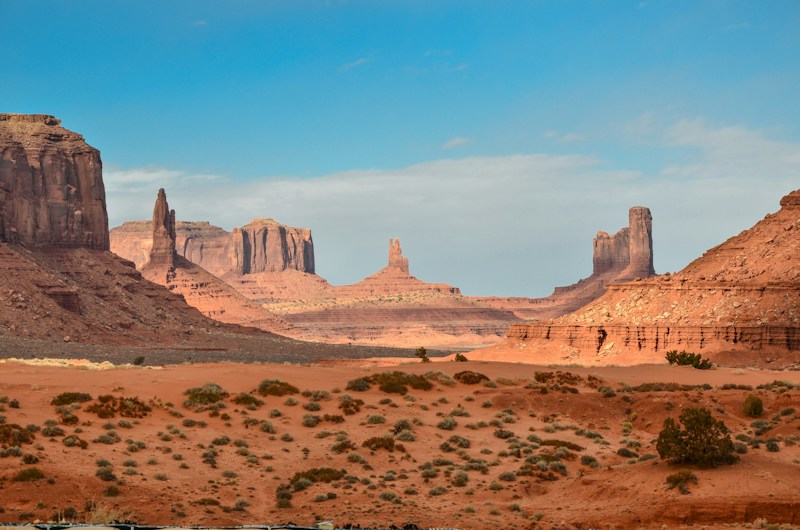
The formations here are among the most well-developed and spectacular in China, rivaling the more famous Yadan in Xinjiang. Some towers rise 50 meters from the desert floor. Others form maze-like corridors that can disorient you in minutes. The combination of volcanic basalt, ancient lake-bed sediments, and millennia of wind erosion has created something that genuinely doesn't look like anywhere else on Earth.
Until recently, this was mostly the domain of geology nerds and off-road enthusiasts. The infrastructure was minimal—just a few basic campsites and a research station. But in 2024, the Mars Camp (火星营地) opened, and everything changed.
Why Foreign Travelers Are Flocking Here in 2026
Let's be honest: China isn't typically what Westerners picture when they think "bucket-list natural wonders." Great Wall, yes. Terracotta Army, obviously. But Mars? That's not in the brochure.
That's exactly why it works. In 2026, the thing that makes travel destinations Instagram-famous isn't just beauty—it's the contrast gap. The moment when reality exceeds expectations so dramatically that you have to tell everyone.
🎯 The 2026 Travel Trend: "Total Expectation Reversal"
Travel analysts have identified a new pattern in what makes destinations go viral: places that completely subvert what visitors expected from a country. China—perceived as crowded cities and ancient history—suddenly offering authentic Martian landscapes? That's the kind of cognitive dissonance that drives engagement.
On Reddit's r/solotravel and r/ChinaTravel, posts about Eboliang have increased 340% year-over-year. Most follow a similar arc: "I came to China for the food and history, and left absolutely obsessed with this random desert place I'd never heard of."
The 2026 visa-free transit policy (240 hours across 55+ countries) has made it easier than ever for short-stay visitors to add Eboliang to a China itinerary. You can now fly into Xining or Golmud, spend a few days acclimatizing, and arrange a 4WD tour to the camp. No special permits required for most travelers.
SarahFromSeattle's viral video actually addressed this directly: "I spent three weeks in China and this was the part I was least expecting. I came for Shanghai and Beijing and left having changed my whole perspective on what China actually is." Her video has 1.2 million likes and counting.
What You Can Actually Do There
Unlike some "adventure" destinations that are really just about taking photos, Eboliang and the Mars Camp offer genuine experiences—several of them genuinely unique to this specific location.
🚀 The Mars Camp Experience
The fully enclosed "Mars habitat" pods at the camp are genuinely immersive. The design was modeled on actual Chinese Mars mission plans, and the interior has a surprisingly authentic sci-fi feel. You can book overnight stays in the太空舱 (space capsule) pods, which include:
- Climate-controlled sleeping pods with simulated spacecraft interiors
- Virtual reality Mars walk experiences
- Remote-controlled "Mars rover" exploration of the surrounding terrain
- Astronomy-guided night sky viewing (the area has virtually zero light pollution)
- Authentic "space food" for dinner—freeze-dried rations reimagined by a Beijing chef
🚗 Self-Driving & Off-Road Tours
The most popular way to explore Eboliang is by joining a convoy tour from Delingha or Golmud. These typically include:
- Professional 4WD vehicles equipped for desert terrain
- Local guides who know the "no-go" zones (some areas are geologically unstable)
- Photography stops at the most spectacular formations
- A full day exploring the site, plus sunset viewing
Pro tip from local guides: The golden hour just before sunset produces colors that look artificially saturated. Bring a polarizing filter if you have a camera. Many visitors think their phone has a filter applied when they see the raw photos.
🌌 Night Sky Astronomy
Without exaggeration, the night sky here is among the clearest in China. The camp provides high-quality telescopes and runs astronomy sessions nightly, weather permitting. During summer months, you can see the Milky Way core clearly with the naked eye.
According to the camp's resident astronomer, "We see people cry sometimes. Not because they're sad—because they've never actually seen what a real night sky looks like. After a lifetime of cities, this still hits people."
Practical Info for 2026
📍 Location & Getting There
Eboliang Martian Camp
Haixi Prefecture, Qinghai Province, China
Nearest airports:
• Xining Caojiabao Airport (via Beijing/Shanghai connections) — 8-9 hours by road
• Golmud Airport (better for shorter transfers) — 4-5 hours by road
Best approach: Fly into Xining, spend a night acclimatizing (elevation 2,200m), then either join an organized tour or hire a 4WD with driver for the journey. Most tours depart very early (4-5 AM) to reach the site by sunrise.
💰 Costs (2026 Estimates)
| 4WD day tour from Delingha | ¥800-1,200 (~$110-165) |
| Mars Camp pod stay (per person, double occupancy) | ¥1,200-1,800/night (~$165-250) |
| Space food dinner experience | ¥280-350 (~$38-48) |
| VR Mars walk session | ¥150 (~$20) |
| Full day Eboliang + camp experience | ¥2,000-2,500 (~$275-345) all-inclusive |
⚠️ Important Safety Notes
Altitude: The camp sits at approximately 2,600m (8,500 feet). This isn't extreme altitude, but if you're coming from sea level, give yourself 24-48 hours to acclimatize in Xining first. Altitude sickness is real here.
No mobile signal: There's essentially no cellular coverage in the Eboliang area. The Mars Camp has satellite WiFi for emergencies, but don't plan on being connected. This is a feature, not a bug, but tell family before you go.
Extreme temperature variation: Summer days can hit 35°C, but nights drop to near freezing. Winter is severe. If you're visiting between November-March, expect -20°C nights. The camp pods are heated, but day tours are uncomfortable in winter.
Physical fitness: You don't need to be an athlete, but you should be able to walk on uneven terrain for 2-3 hours. The sand can be exhausting.
📅 Best Time to Visit
April-June: Pleasant temperatures (15-25°C), but can be windy. Peak wildflower season nearby.
July-September: Warmest, best for overnight camping. Also peak season—expect more visitors.
October-November: Excellent conditions, fewer crowds. Our recommendation for serious photographers.
December-March: Dramatic landscapes but brutal cold. Only for experienced cold-weather travelers.
📱 Connecting with Chinese Social Media
If you want to follow the conversation in Chinese (or see what the buzz is about), search these terms:
- 俄博梁 (Ébówǎng) — the main place name
- 火星营地 (Huǒxīng Yíngdì) — Mars Camp
- 地球上最像火星的地方 — "most Mars-like place on Earth"
- 俄博梁雅丹 — Eboliang Yadan landforms
On Xiaohongshu (小红书), the hashtag #俄博梁 has over 180 million views. Search #火星营地 for camping content and #俄博梁旅游 for travel guides in Chinese.
How to Find This Place on Chinese Social Media
Whether you're already planning a trip or just curious, here's how to follow the Eboliang conversation on Chinese platforms.
On Douyin (抖音)
Douyin is basically TikTok's Chinese twin. Search these accounts and hashtags:
- @火星营地官方 — Official Mars Camp account (posts drone footage regularly)
- #俄博梁 — 650M+ views and climbing
- #地球上最像火星的地方 — the branded hashtag
- #西北旅游 — broader Northwest China travel content that frequently features Eboliang
Pro tip: The camp posts a daily sunset livestream from the main observation deck. You can watch from anywhere.
On Xiaohongshu (小红书)
Search for:
- 俄博梁攻略 — "Eboliang guide"
- 火星营地住宿体验 — "Mars Camp accommodation experience"
- 俄博梁拍照 — "Eboliang photography" — tons of photo guides here
On Bilibili (B站)
Bilibili is China's video platform popular with younger users. Search for 俄博梁 or 火星营地 to find long-form vlogs (many with English subtitles in comments). Some of the most comprehensive Eboliang videos come from Chinese travel vloggers here.
Frequently Asked Questions
Is Eboliang safe for solo travelers?
Physically, yes—this isn't dangerous terrain like mountains or caves. The main consideration is that you'll need a 4WD to get here, and you'll almost certainly want a guide. Going alone without local knowledge isn't recommended because the terrain can disorient you quickly. Book through a tour operator in Delingha or Xining.
Do I need a visa to visit Eboliang?
If you're from one of the 55+ countries eligible for China's 240-hour visa-free transit, you can visit Eboliang as part of your China trip without additional visa arrangements. Just ensure your passport is valid for 6+ months and you have proof of onward travel. For longer stays or different nationalities, check current visa requirements.
Can I visit without joining a tour group?
Technically yes, but practically you'll need to hire a 4WD with driver in Delingha. Public transport doesn't reach Eboliang. Most visitors book through their Xining or Delingha hotel—the staff usually have contacts with reliable drivers. Expect to pay ¥800-1,500 for a full day including guide.
What's the actual Mars-like feeling like?
Visitors consistently describe the experience as "surreal" and "disorienting in the best way." The scale is hard to appreciate in photos—you're driving through corridors of 20-50 meter formations that look manipulated, like movie sets. At sunset, the colors shift through orange, rust, and deep purple. At night, the stars are genuinely overwhelming. Most people who visit remember it as one of the strangest landscapes they've ever experienced.
Is it crowded?
Compared to Zhangjiajie or Guilin? Not even close. But "not crowded" in China still means you'll see other tour groups at popular photo spots, especially in July-August. If you visit in shoulder season (April-May, September-October), you can have sections of the park almost to yourself. The camp itself has limited capacity—book in advance if you want an overnight stay.
Is the "space food" actually good?
Honestly? Better than it sounds. The Beijing chef who designed the menu focused on presentation and flavor, not just novelty. The "freeze-dried" aspect is mostly theater. You can get normal meals too if space food isn't appealing. Most visitors go for the experience rather than the cuisine.
Final Thoughts: Why This Place Matters in 2026
There's a recurring theme in the interviews, Reddit posts, and social media content around Eboliang: surprise. Not just mild surprise, but the kind of complete expectation reversal that makes people become evangelists.
China in 2026 is not the China that most foreigners imagine. Yes, it has 3,000 years of history. Yes, the food is incredible. But it also has landscapes that genuinely look like other planets, infrastructure that works better than in many Western countries, and communities that are increasingly welcoming to international visitors after years of being cut off.
Eboliang represents something specific: the parts of China that don't make it into travel brochures. The places you discover because someone on the internet said "wait, you have to see this." In an era where everything feels explored, that's still worth something.
If you're planning a China trip in 2026—even a short one—consider whether Eboliang should be on your list. The journey isn't easy, and it isn't for everyone. But for those who make it, the reaction is almost always the same:
"I came for a weird viral video. I left wondering why this isn't on every travel bucket list on the planet."